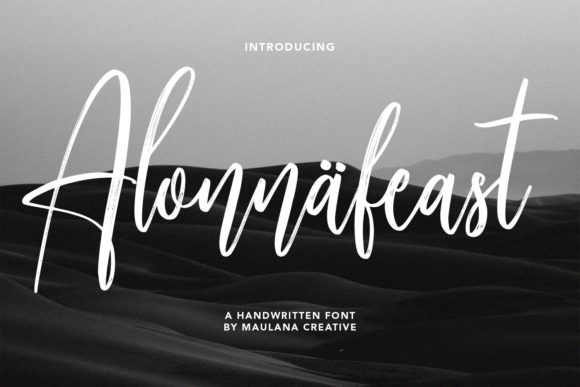
Alonnafeast: Integrating Elegant Handwritten Style into Professional Workflows
In the landscape of digital design and branding, finding a typeface that bridges the gap between professional polish and personal warmth is often a challenge. Many designers struggle to maintain brand consistency while trying to inject a human element into their work. This is where Alonnafeast becomes a critical asset in your creative toolkit. It is not merely a decorative font; it is a stylish and incredibly elegant script font designed to elevate the visual hierarchy of any project.
Understanding how to implement Alonnafeast effectively requires moving beyond simple aesthetic appreciation. For professionals, creators, and business owners aged 20 to 50, the value lies in strategic integration. Whether you are finalizing a wedding invitation suite, drafting a corporate logo, or curating content for a blog, this font serves as a powerful tool for communication. The following guide explores how to incorporate Alonnafeast into your daily workflows, ensuring that every design decision supports your broader goals of quality, efficiency, and brand identity.
The Role of Script Fonts in Modern Branding Strategy
Before diving into specific applications, it is essential to understand why a handwritten touch matters in a digital-first world. Consumers are increasingly fatigued by sterile, mass-produced imagery. They crave authenticity. A script font like Alonnafeast provides an immediate psychological cue of care and attention to detail. When used correctly, it signals that a human being was involved in the creation of the message.
However, using a script font is not about slapping it onto a document at the last minute. It requires a strategic approach to planning. In a typical workflow, the selection of typography happens during the initial concept phase. If you are working on a rebranding project, deciding early on whether Alonnafeast fits your brand voice is crucial. It pairs exceptionally well with clean sans-serif fonts, creating a balance between modern structure and organic flow. This contrast is a fundamental principle of good graphic design that enhances readability while adding character.
Strategic Placement in Design Projects
The versatility of Alonnafeast allows it to function in various stages of a design process. It is particularly effective when used as a focal point. Because of its intricate details and elegant strokes, it demands space. Overcrowding this font can dilute its impact and make the text difficult to read. Therefore, the implementation strategy must prioritize whitespace.
- Primary Headlines: Use Alonnafeast for main titles to immediately set a tone of sophistication.
- Accent Text: Apply it to pull quotes or subheadings to break up dense blocks of body text.
- Signatures: In digital newsletters or email marketing, use it for the sender's name to reinforce personal connection.
This selective application ensures that the font remains a highlight rather than a distraction. It respects the user's need for information while providing an emotional anchor.
Application Across Specific Business Scenarios
Different industries have unique requirements for visual communication. Understanding where Alonnafeast fits into these specific contexts helps streamline your production process. Let us examine how this font interacts with common professional tasks.
Event Planning and Hospitality
For event planners and wedding coordinators, the stakes for visual perfection are high. Alonnafeast looks stunning on wedding invitations, thank you cards, and greeting cards. In this workflow, the font is often the first thing a client sees. It sets the expectation for the quality of the service provided. When designing a physical invitation suite, the elegance of the script translates well to high-quality paper stock, creating a tactile experience that digital cannot replicate.
During the execution phase, ensure that the kerning (spacing between letters) is adjusted carefully. Wedding invitations often feature names and dates that require precise alignment. Using Alonnafeast here allows you to create a bespoke feel without needing custom calligraphy for every single card. This significantly increases efficiency, allowing you to scale your services while maintaining a high-end aesthetic.
Branding and Identity Systems
Entrepreneurs and small business owners often seek to differentiate themselves from competitors through unique branding. Alonnafeast is ideal for logos, business cards, and stationery that aim to convey luxury, creativity, or artisanal quality. However, the implementation requires caution. A logo must be legible at small sizes. Before committing to Alonnafeast for a primary logo mark, test it at various scales.
If the font is too detailed for a favicon or a social media profile picture, consider using it for the logotype alongside a simpler icon. This hybrid approach maintains the elegance of the script while ensuring technical compatibility across different platforms. For business cards, the font works beautifully for the owner's name, while the contact details should remain in a highly readable sans-serif typeface to ensure clarity.
Content Creation and Digital Marketing
Bloggers, publishers, and marketers frequently face the challenge of making digital content feel personal. Alonnafeast can be integrated into website headers, newsletter subject lines, and social media graphics. When used in email marketing, a personalized greeting in this script can increase open rates by fostering a sense of direct conversation.
In the context of quote graphics or inspirational posts, this font adds a layer of authority and grace. It transforms a generic statement into a memorable piece of content. The key is consistency. If you choose Alonnafeast for your brand voice, it should appear regularly but not ubiquitously. Create a style guide that dictates exactly when and how to use the font to prevent visual fatigue among your audience.
Technical Considerations and Workflow Integration
Successful implementation relies on more than just artistic choice; it requires technical proficiency. As a designer or project manager, you must consider compatibility and usability before starting a project.
File Formats and Licensing
Always verify the licensing terms associated with Alonnafeast. Commercial projects, such as those for clients or published books, may require a commercial license, whereas personal projects might only need a standard license. Neglecting this step can lead to legal issues down the line. Ensure you have the correct file formats (OTF, TTF, WOFF) available for your software stack, whether you are using Adobe Creative Cloud, Canva, or other design tools.
When preparing assets for web use, convert the font to web-safe formats or utilize CSS @font-face rules to ensure it renders correctly across browsers. This prevents fallback issues where the browser defaults to a generic serif or sans-serif font, ruining the intended aesthetic.
Quality Control and Readability
A common pitfall in using script fonts is sacrificing readability for style. Alonnafeast is elegant, but its flourishes can sometimes cause letters to merge, especially at smaller sizes or low resolutions. To maintain quality control, establish a minimum size rule for the font within your project guidelines. Never use it for long paragraphs of body text. Instead, reserve it for short phrases, headings, and emphasis.
Test your designs in black and white mode to check contrast and legibility. If the script disappears against the background or blends too much, adjust the color palette or add a subtle drop shadow. These adjustments ensure that the elegance of the font does not compromise the functional goal of the design: communication.
Long-Term Consistency and Brand Growth
Integrating Alonnafeast into your workflow is not a one-time task; it is part of building a lasting brand identity. As your business grows or your projects evolve, the font should remain a consistent thread. This consistency builds recognition. When a client sees the distinctive curves of Alonnafeast, they should immediately associate it with your specific brand or service.
To support this long-term vision, organize your font files meticulously. Keep a dedicated folder for licensed scripts, complete with documentation on usage rights and version history. This organization saves time during future projects and ensures that you never accidentally use an outdated or unauthorized version of the font.
Furthermore, stay updated on design trends. While Alonnafeast offers timeless elegance, the way it is applied may shift over time. Regularly review your existing materials to ensure they still align with current standards. Perhaps a new campaign requires a bolder application of the font, or a new product line calls for a subtler approach. Flexibility within a consistent framework is the hallmark of a mature design strategy.
Conclusion: Elevating Your Output
Ultimately, the power of Alonnafeast lies in its ability to humanize your work. By thoughtfully integrating this stylish and incredibly elegant script font into your processes, you transform standard documents into compelling narratives. Whether you are crafting a wedding invitation, designing a logo, or writing a blog post, the decision to use Alonnafeast is a commitment to quality and attention to detail.
Remember that the best workflows are those that balance creativity with practicality. Do not let the desire for perfection stall your progress. Instead, use Alonnafeast as a reliable tool that enhances your output and resonates with your audience. With proper preparation, compatibility checks, and a clear understanding of where the font fits in your design hierarchy, you can achieve results that are both beautiful and effective. Embrace the handwritten touch, and watch your projects gain the depth and personality they deserve.