Transforming Digital and Print Design with the Happymonday Script Font
In the rapidly evolving landscape of visual communication, the choice of typography often dictates the emotional resonance of a message. While sans-serif and serif typefaces serve as the backbone of modern readability, there exists a specific niche where personality, elegance, and artistic flair take precedence: the script font category. Among the myriad of options available to designers and creators today, Happymonday stands out as a unique asset that bridges the gap between casual handwritten charm and refined calligraphic structure.
This article explores the multifaceted nature of this magical script font, examining how it serves diverse audiences ranging from social media influencers to corporate strategists. By understanding the structural nuances and practical applications of Happymonday, professionals can elevate their projects from standard layouts to true pieces of art.
The Artistic Architecture of a Magical Script
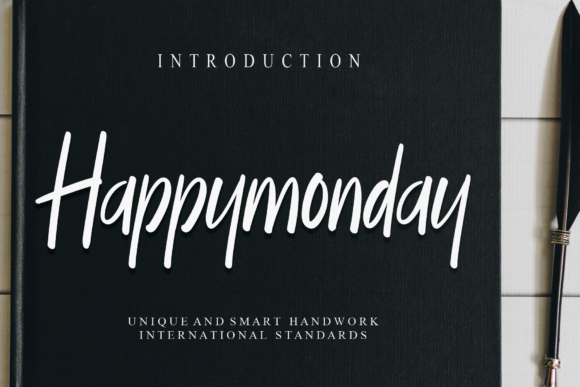
To truly appreciate the utility of any design tool, one must first understand its construction. Happymonday is not merely a collection of random strokes; it is a carefully engineered digital typeface that mimics the fluidity of a brush or pen while maintaining the consistency required for digital reproduction. The font is described as having a "touch of elegance," which manifests in its stroke variation and ligature handling.
Unlike many script fonts that struggle with legibility when used at small sizes or in dense blocks of text, Happymonday balances aesthetic appeal with functional clarity. The curves are smooth, avoiding the jagged edges that can plague poorly vectorized scripts. This precision allows the font to retain its organic feel even when scaled down for mobile interfaces or up for large-format signage. The "magical" quality often attributed to such fonts comes from their ability to instantly shift the tone of a project, injecting warmth and human connection into otherwise sterile designs.
Bridging the Gap Between Digital and Analog
One of the most significant challenges in modern web and print design is replicating the authenticity of hand-lettering without the physical constraints of ink and paper. Happymonday addresses this by offering a hybrid experience. It captures the imperfections of the human hand—the slight variations in pressure and flow—while adhering to the grid-based logic necessary for screen rendering. This duality makes it an invaluable resource for creators who wish to maintain brand consistency across various mediums without sacrificing the personal touch that consumers crave.
- Fluid Connectivity: The characters are designed to connect naturally, creating a seamless flow that guides the reader's eye across the line.
- Elegant Curvature: The terminal strokes possess a sophisticated taper, adding a layer of refinement suitable for high-end branding.
- Dynamic Weight: The variation in line thickness creates a sense of movement and rhythm within static text.
Practical Applications Across Industries
The versatility of Happymonday extends far beyond simple decorative headings. Its adaptability allows it to find a home in almost every sector of the creative economy. Whether the goal is to drive engagement on social platforms or to convey authority in a professional setting, this font offers a solution tailored to the specific context.
Revitalizing Social Media Presence
In the realm of social media, particularly on visual-first platforms like Instagram, the competition for attention is fierce. Standard block text often gets lost in the feed, but a well-chosen script can stop the scroll. Happymonday is frequently sought after by content creators looking for fonts for Instagram that offer more than just a basic cursive look.
When used for captions, story overlays, or graphic quotes, the font adds a layer of intimacy. It suggests that the content was crafted with care, much like a handwritten note passed from friend to friend. For lifestyle bloggers, fashion influencers, and beauty experts, using Happymonday helps establish a persona that is both aspirational and approachable. The elegance of the script aligns perfectly with luxury aesthetics, while its playful undercurrent keeps the content feeling fresh and modern rather than archaic.
Empowering DIY Projects and Crafters
The rise of the maker economy has created a massive demand for high-quality typography among hobbyists. From custom wedding invitations to personalized gift tags, crafters often struggle to find fonts that look professional yet remain easy to work with in cutting machines and word processors. Happymonday has become a go-to choice for calligraphy scripts for DIY projects because of its clear character distinction.
For educators and parents involved in school projects, the font provides a way to make learning materials visually engaging. Imagine a science fair poster or a history timeline where the titles are rendered in Happymonday; the result is a document that commands respect while inviting exploration. Small business owners selling handmade goods can use the font to create packaging labels that tell a story of craftsmanship before the customer even opens the box.
Strategic Implementation for Professionals
While the font is undeniably popular among creatives, its utility extends to serious business applications. Professional designers and marketing teams must exercise strategic judgment when incorporating script fonts into a broader brand identity. The key lies in balance and hierarchy.
Enhancing Brand Storytelling
Brands are increasingly moving away from rigid, impersonal messaging toward narratives that emphasize human connection. Happymonday serves as a powerful vehicle for this shift. When integrated into a logo or a campaign slogan, the font can soften a corporate image without diluting its core values. For instance, a wellness company might pair a sturdy sans-serif body copy with Happymonday headlines to suggest a blend of scientific reliability and holistic care.
However, effective implementation requires an understanding of contrast. Using Happymonday as the primary font for long-form articles is generally inadvisable due to reading fatigue. Instead, it should be reserved for emphasis points: pull quotes, section headers, or signature lines. This selective usage ensures that the font retains its impact and does not become background noise.
Optimizing for User Experience (UX)
From a technical standpoint, integrating a script font like Happymonday into a website requires consideration of load times and cross-browser compatibility. Modern web fonts are optimized for performance, but designers must ensure that the fallback fonts do not disrupt the layout if the script fails to load. Furthermore, accessibility standards dictate that text must be legible for users with visual impairments. While Happymonday is elegant, it should be paired with a highly readable sans-serif font for body text to ensure compliance with WCAG guidelines.
Comparative Advantages in the Market
The market for script fonts is saturated with thousands of options, making it difficult to distinguish between a generic download and a premium, well-crafted typeface. Happymonday differentiates itself through its specific focus on elegance combined with usability. Many competing fonts prioritize style over substance, resulting in characters that are difficult to decipher or ligatures that clash with standard kerning settings.
- Ligature Consistency: Unlike fonts that require manual intervention to fix awkward connections, Happymonday features automatic ligatures that engage seamlessly.
- Vowel Distinction: In many script fonts, lowercase 'a' and 'o' can look identical, causing confusion. Happymonday maintains distinct shapes for these characters, aiding rapid reading.
- Character Set Completeness: A robust font family includes support for special characters, currency symbols, and accented letters essential for international markets. Happymonday is built with this comprehensive set in mind.
Future Trends and the Evolution of Typography
As we move further into an era dominated by digital interaction, the trend toward personalized and emotive design shows no signs of slowing down. Consumers are becoming more discerning, seeking brands that communicate with authenticity. The "handwritten" aesthetic is no longer just a trend; it is becoming a standard expectation for genuine engagement.
In this context, Happymonday represents a forward-thinking approach to typography. It anticipates the need for fonts that can function in dynamic environments, adapting to different screen sizes and resolutions while maintaining their artistic integrity. As AI and generative design tools begin to influence how we create content, having a reliable, high-quality script font like Happymonday in one's toolkit provides a foundation upon which to build unique, human-centric designs.
The Role of Educators and Researchers
It is also worth noting the value of this font for academic and research presentations. Visual aids play a crucial role in retaining audience attention during lectures and conferences. Incorporating Happymonday into presentation slides can help highlight key findings or thematic concepts, breaking the monotony of bullet points. Researchers presenting qualitative data or case studies can use the font to underscore the human element of their work, making complex information more accessible and relatable.
Conclusion: Elevating Creative Ideas
The journey from a raw concept to a finished design is paved with countless decisions, and typography is often the most influential of them all. Happymonday offers a compelling solution for those looking to infuse their work with magic, elegance, and a touch of the extraordinary. Whether you are designing a single Instagram post, launching a new product line, or crafting a detailed DIY project, this font provides the versatility needed to turn any idea into a true piece of art.
By understanding the strengths of Happymonday and applying it with strategic intent, professionals and hobbyists alike can achieve a level of polish and personality that resonates deeply with their audience. In a world of standardized digital experiences, the choice to use a font with soul and character is a bold statement—one that defines the difference between being seen and being remembered.