Holly Wings Font Evaluation
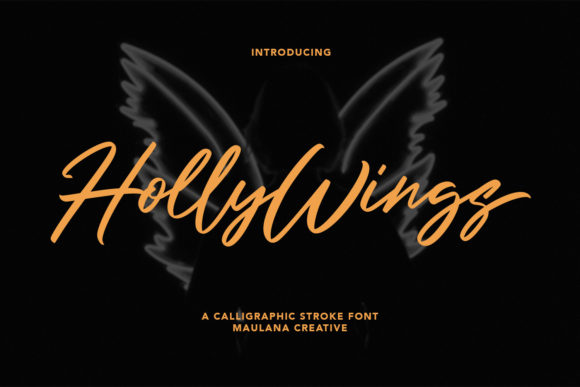
Holly Wings is a bold and fashionable paint brushed script font that brings a distinct artistic flair to digital and print projects. Unlike standard serif or sans-serif typefaces, this font mimics the organic movement of a brushstroke, offering a sense of immediacy and human touch that mechanical fonts often lack. For designers, hobbyists, and business owners seeking to add a personalized element to their work, understanding the specific characteristics and applications of Holly Wings is essential before integrating it into a design system.
The primary appeal of this typeface lies in its visual weight and texture. The "bold" descriptor in its classification suggests that the strokes are thick and substantial, ensuring legibility even at smaller sizes when used correctly. However, the defining feature remains the "paint brushed" aesthetic. This style implies irregular edges and varying stroke widths, which simulate the effect of hand-painting on paper. When evaluating this font, it is important to recognize that it occupies a specific niche within the market: it is designed for impact and personality rather than neutrality or high-volume data presentation.
Primary Applications and Design Contexts
Designers frequently turn to Holly Wings for projects where emotional resonance and elegance are paramount. The font's structure makes it particularly well-suited for wedding invitations. In this context, the brushstroke quality conveys romance and formality without the stiffness of traditional calligraphy. It bridges the gap between modern minimalism and classic ornate styles, allowing couples to create stationery that feels both contemporary and timeless.
Beyond nuptial events, the font serves as a strong candidate for thank you cards and greeting cards. These items often require a message that feels intimate and sincere. A typed message can sometimes feel transactional, whereas a font like Holly Wings introduces a layer of perceived effort and care. The visual texture suggests that the sender took time to craft the message, enhancing the recipient's experience.
In the realm of branding, Holly Wings offers versatility for logos and business cards. Brands that wish to project creativity, artisanal quality, or a boutique atmosphere may find this typeface aligns with their identity. For instance, a handmade jewelry brand, a floral shop, or an independent coffee roaster might utilize the logo in this script to emphasize the human element behind the product. On business cards, it can be used effectively for names or titles to create a memorable first impression, provided the rest of the card design maintains sufficient contrast to ensure readability.
Benefits of Using a Paint Brushed Script
Selecting Holly Wings provides several functional and aesthetic advantages. The most significant benefit is immediate differentiation. In a digital landscape saturated with uniform geometric fonts, a bold script stands out. It commands attention and sets a specific tone from the moment a user interacts with the content.
Furthermore, the font supports the trend toward personalization. Modern consumers increasingly value authenticity. By using a typeface that mimics hand-lettering, designers can replicate the warmth of handwritten correspondence at scale. This is particularly valuable for marketing materials such as quotes or social media graphics, where engagement relies heavily on visual appeal and relatability.
The bold nature of the font also aids in hierarchy. Because the strokes are thick, it naturally draws the eye, making it an excellent choice for headlines, headers, or key phrases within a layout. It allows designers to establish a clear focal point without relying solely on color changes or excessive spacing.
Considerations and Potential Tradeoffs
While Holly Wings is visually striking, it comes with inherent limitations that must be weighed during the selection process. The most critical consideration is legibility. Script fonts, by definition, often feature connected letters and complex flourishes. While Holly Wings is bold, long paragraphs of text set in this font will likely be difficult to read. It should never be used for body copy, instructions, or any content requiring sustained reading.
Another tradeoff involves professional perception. Because the font is so expressive, it carries a specific stylistic baggage. It may not be appropriate for corporate environments that prioritize clarity, authority, and neutrality. Legal firms, financial institutions, or medical practices might find the playful or artistic nature of Holly Wings undermines their credibility. In these sectors, a more understated typeface is usually the safer and more effective choice.
Technical compatibility is also a factor to consider. Some decorative scripts do not render well across all devices or browsers, particularly if they rely on thin lines that disappear on low-resolution screens. While the bold weight of Holly Wings mitigates this risk somewhat, designers should always preview the font in its intended environment to ensure the details remain crisp.
Situational Fit and Alternatives
Holly Wings is a strong fit for situations where the goal is to evoke emotion, celebration, or creativity. If a project requires a "personalized touch," this font delivers that through its simulated brushwork. It excels in short-form content where visual impact outweighs informational density.
However, there are scenarios where alternatives may be worth considering. If the design requirement calls for a clean, minimalist aesthetic, a simpler sans-serif script might be more appropriate. For formal documents requiring strict adherence to readability standards, a traditional serif font would be superior. Additionally, if the project involves extensive text, a highly legible sans-serif or slab-serif typeface should be prioritized over any script option.
When comparing options, designers should evaluate the specific brand voice. Is the brand friendly and approachable? Holly Wings fits well. Is the brand serious and direct? A different font family is necessary. The decision should not be based solely on the visual appeal of the letterforms but on how those forms communicate the intended message to the target audience.
Practical Decision-Making Insights
To determine whether Holly Wings aligns with your goals, start by defining the purpose of the design. Ask yourself what emotion you want the viewer to feel. If the answer involves warmth, excitement, or sophistication, the font is likely a viable candidate. If the priority is efficiency, clarity, or data transmission, look elsewhere.
Testing is crucial. Before committing to a full project, create mockups using the font alongside your chosen secondary typeface. Ensure there is enough contrast between the script and the supporting text. A common mistake is pairing two decorative fonts; instead, balance Holly Wings with a neutral, simple font to let the script shine without creating visual clutter.
Finally, consider the medium. For large format prints like banners or posters, the bold strokes of Holly Wings will translate beautifully. For small mobile screens, test the font size carefully to ensure the details do not become muddy. By approaching the selection process with these practical constraints in mind, you can leverage the unique qualities of Holly Wings to enhance your designs effectively while avoiding common pitfalls associated with decorative typography.