Why Delay Brings Elegance to Your Design Projects
In a digital landscape saturated with rigid, uniform typefaces, finding a way to inject genuine personality into your work can feel like an uphill battle. This is where Delay steps in as a transformative tool for anyone seeking to bridge the gap between professional polish and human warmth. It is not merely a font; it is a stylistic choice that communicates sophistication, care, and a distinct handwritten touch without sacrificing legibility or impact.
Whether you are a wedding planner curating invitations for a once-in-a-lifetime event, a small business owner refining brand identity, or a blogger looking to make their quotes pop, the visual language of your text matters immensely. Delay offers a solution that feels personal yet incredibly elegant, making it a versatile asset for modern creators who understand that typography sets the emotional tone before a single word is read.
The Art of Handwritten Authenticity in Digital Spaces
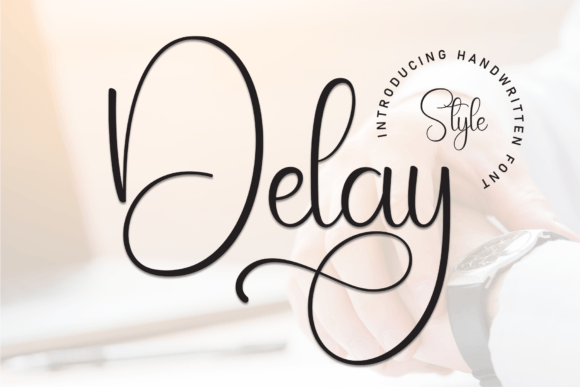
One of the most significant challenges in contemporary design is replicating the intimacy of handwriting on screens and printed materials. Many script fonts attempt this but often fall short, appearing either too messy or artificially generated. Delay avoids these pitfalls by maintaining a clean, stylish structure that mimics the fluid motion of a skilled hand while retaining the precision required for professional output.
When you use Delay, you are effectively adding a layer of authenticity to your communication. Consider a scenario where you are designing a thank you card for a client or a partner. A standard sans-serif might convey gratitude, but it lacks the emotional weight of a personal note. By switching to Delay, the message instantly feels more curated and sincere. The subtle variations in stroke width and the natural flow of the letters suggest that time and thought were invested in the creation, which resonates deeply with adult audiences aged 20 to 50 who value genuine connection over mass-produced content.
Enhancing Wedding and Event Invitations
The wedding industry relies heavily on first impressions, and the invitation is often the very first physical touchpoint a guest has with the couple's story. Here, Delay shines as a primary driver of elegance. Its ability to look stunning on paper allows designers to create pieces that feel heirloom-quality even before the envelope is opened.
- Ceremony Programs: Using Delay for headings creates a cohesive narrative that guides guests through the event with grace.
- Rustic and Modern Blends: Unlike overly ornate scripts that clash with modern minimalism, Delay strikes a balance that works equally well with gold foil stamping or simple matte finishes.
- Personalized Touches: When incorporating names or dates, the script nature of the font adds a bespoke feel that generic templates simply cannot achieve.
For professionals in this sector, choosing the right typeface is about reducing the cognitive load on the reader. Delay is designed to be legible enough to read quickly while remaining decorative enough to inspire excitement. This dual capability ensures that essential details are communicated clearly without detracting from the overall aesthetic appeal.
Building Brand Identity with a Human Face
For entrepreneurs, freelancers, and marketers, establishing a unique brand voice is critical. In a market where everyone claims to offer "premium" services, visual differentiation is key. Delay serves as a powerful differentiator for businesses that want to position themselves as boutique, artisanal, or highly personalized.
Imagine a lifestyle blogger launching a new newsletter or a coffee shop owner redesigning their menu. Applying Delay to logos, business cards, or header images immediately signals a specific vibe: one that is approachable yet refined. It suggests that the brand values craftsmanship and attention to detail. This is particularly effective for small business owners who compete against larger corporations by offering a more intimate customer experience.
However, successful implementation requires thoughtful placement. While Delay is excellent for headlines and display text, it is generally less suitable for long-form body copy due to its script nature. The strategic use of this font involves pairing it with a neutral, highly readable sans-serif or serif font. This combination allows the designer to maintain readability for instructions or detailed information while using Delay to highlight key messages, pull quotes, or branding elements.
Practical Applications for Content Creators
Beyond print, the utility of Delay extends seamlessly into digital media. Social media managers and graphic designers frequently need to create shareable graphics that stop the scroll. A quote card featuring an inspirational message set in Delay stands out in a feed dominated by blocky, corporate fonts.
- Greeting Cards: Whether digital or physical, holiday greetings sent with Delay feel more heartfelt than automated templates.
- Logos: For service-based businesses like photographers, florists, or consultants, a logo in Delay can communicate trust and creativity simultaneously.
- Presentation Decks: Adding a touch of Delay to title slides can elevate a standard business presentation, showing that the presenter cares about the audience's experience.
By integrating this font into various touchpoints, brands can create a consistent visual language that reinforces their commitment to quality. The result is a stronger brand recall and a deeper emotional connection with the target audience.
Navigating Limitations and Making Strategic Choices
While Delay is a powerful asset, it is not a universal solution for every design challenge. Understanding its limitations is just as important as recognizing its strengths. Like any specialized tool, it performs best when used within the context of its intended purpose.
For instance, if your project involves technical documentation, legal contracts, or data-heavy reports, Delay would likely hinder rather than help. In these scenarios, clarity and neutrality are paramount, and a script font could introduce unnecessary distraction or appear unprofessional. Similarly, for users working with non-Latin alphabets or those requiring extreme legibility at very small sizes (such as fine print on packaging), testing is essential. The intricate nature of script fonts can sometimes blur when scaled down too far.
Furthermore, accessibility should always be a priority. Screen readers may struggle with certain stylized characters, so it is crucial to ensure that the underlying text remains accessible even if the visual representation is stylized. Designers must also consider the cultural context; while Delay evokes a sense of Western elegance, it may not align with all cultural aesthetics or brand identities.
Comparing Options for Specific Goals
Before committing to Delay for a major project, it is wise to compare it against other script options. Some fonts prioritize speed and casualness, while others focus on formal calligraphy. Delay occupies a unique space: it is stylish and incredibly elegant but retains a modern sensibility that prevents it from feeling dated or overly traditional.
If your goal is to create something that looks stunning on wedding invitations or thank you cards, Delay is likely a top contender. However, if you need a font that screams "modern tech startup," a cleaner geometric script might be more appropriate. The decision ultimately depends on the specific outcome you wish to achieve. By evaluating the mood you want to convey and the medium you are using, you can determine if Delay is the right fit for your creative vision.
In conclusion, Delay represents a thoughtful investment in the quality of your design work. It empowers professionals, hobbyists, and businesses to communicate with a level of sophistication and warmth that resonates with today's discerning audiences. When used strategically, it transforms ordinary designs into memorable experiences, proving that the right typeface can indeed make all the difference.